Joseph Beuys was the first artist I looked at when I started my MA and initially I was a bit non-plussed by his work. However, I did really like the work ‘The End of the Twentieth Century’ and ‘7000 Oaks’.
‘The End of the Twentieth Century’ consists of a mass of basalt pillars arranged seemingly haphazardly. ‘7000 Oaks’ was part of Beuys environmental works, he was the one of the founders of the green movement in Germany, and consists of oak trees being planted alongside a basalt column or ‘stele’.
Stele has a few meanings. It means ‘the central core of the stem and root of a vascular plant’ and also an ancient upright stone monument. Beuys meaning in pairing these two objects was that a forest could be grown out of the act of planting basalt pillars.
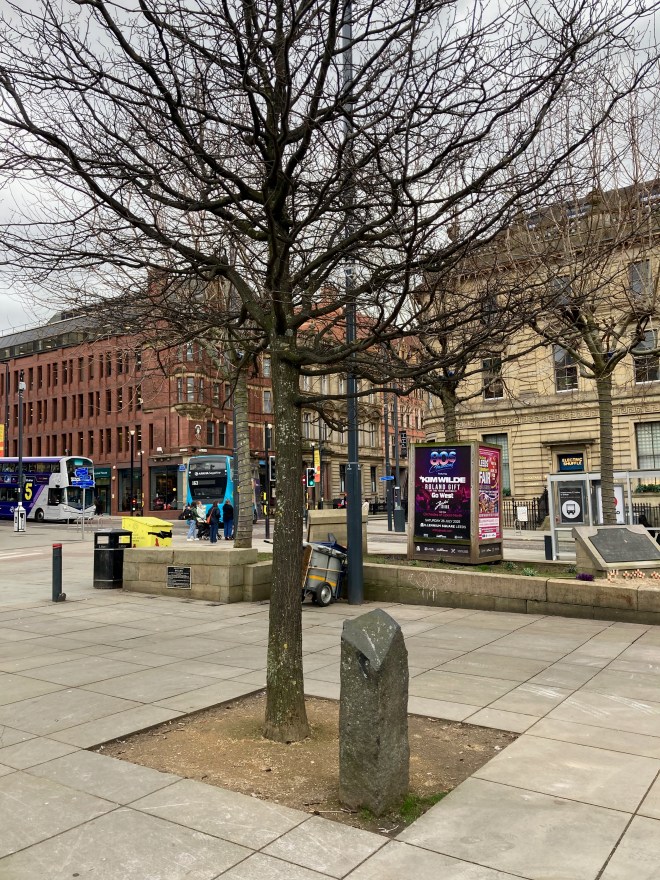
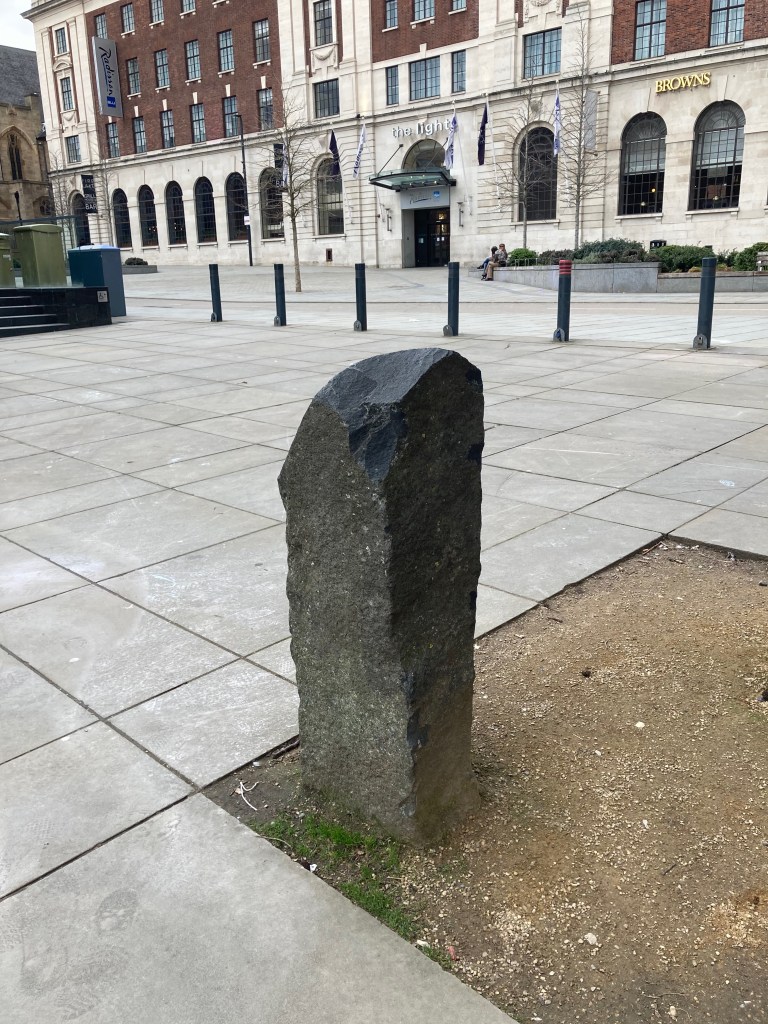
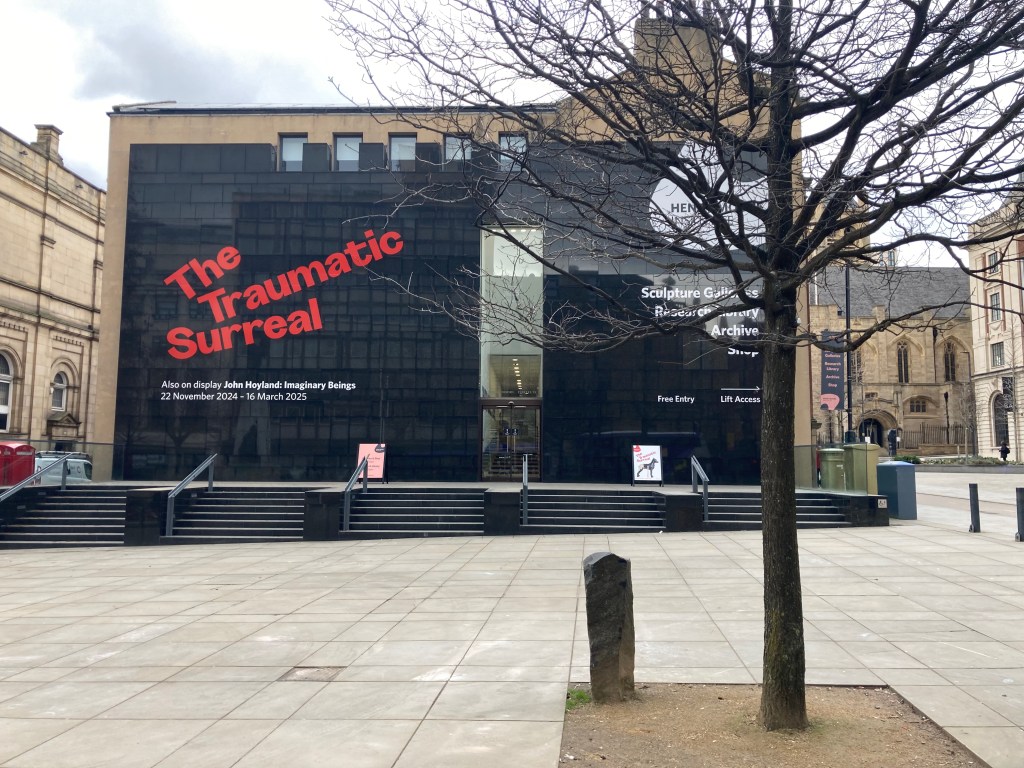
One of the 7000 Oaks planted by Beuys is actually in Leeds, outside the Henry Moore Institute. It was planted by Beurys in 1998, complete with basalt stele. I don’t know how many times I must have walked past that installation but I took time to go and have a look yesterday on my way back from the Hepworth in Wakefield.
How brilliant to have a living artwork by Beurs on my doorstep. It also ties in well with my interest in landscape and landscape art. The local moors and valleys are peppered with ancient stone monuments and loan trees and it struck me as quite disconcerting and unsettling to see Beuys’ basalt monument sitting in such an urban environment and going largely unnoticed.
As a foot note I really connected with Beuys’ works when I saw first hand many of this sculptures in the Lenbachhaus Museum in Munich. So much so that I included an homage to Beuys in my degree show.

 Paul Tranter